
Dspresso (Conversational Health Analytics) is a full-stack application that leverages multi-modal AI to analyze conversational data—both text and audio—to identify linguistic and acoustic biomarkers associated with depression. Developed as an AI Capstone Project, it serves as an assistive tool for clinicians by providing real-time analysis of patient conversations to support mental health assessments.
Backend: FastAPI with Python for building robust RESTful APIs and handling AI model inference. The backend processes audio and text inputs, runs them through trained models, and returns depression risk assessments.
Frontend: React with Vite and TypeScript for a modern, responsive user interface. The UI allows users to choose between text-based or audio-based assessment modes, providing an intuitive experience for clinicians and patients alike.
AI/ML: PyTorch for deep learning model development, OpenAI Whisper for speech-to-text transcription, and Hugging Face Transformers for NLP-based sentiment and linguistic analysis. The multi-modal approach combines acoustic features with text analysis for more accurate predictions.
Infrastructure: Docker for containerization, SQLAlchemy for database management, and a well-organized project structure separating backend logic, frontend components, data storage, and Jupyter notebooks for experimentation.
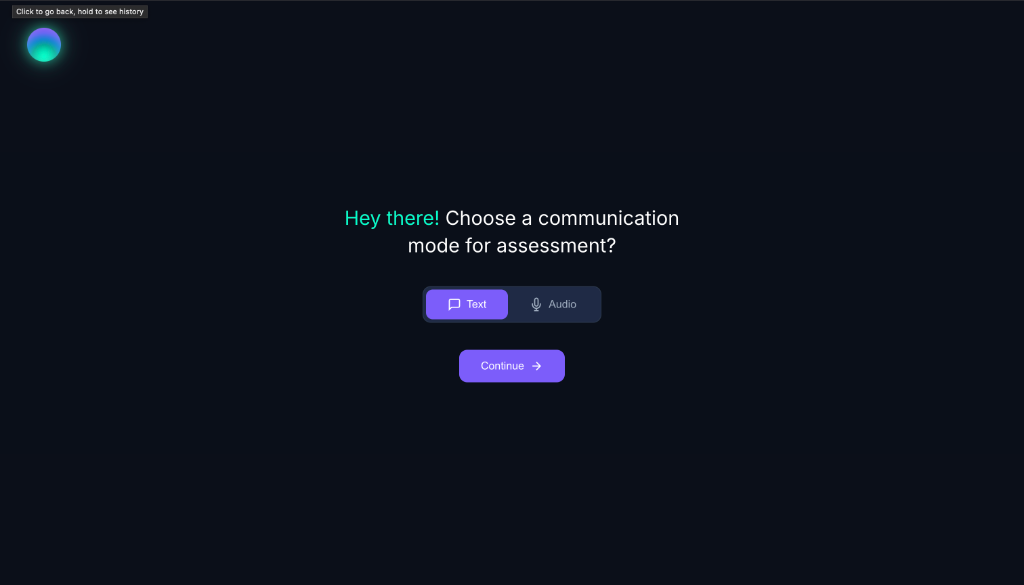
• Multi-Modal Analysis: Combines text-based linguistic analysis with audio-based acoustic feature extraction for comprehensive depression detection. • Real-Time Processing: Instant analysis and feedback on conversational inputs, enabling immediate clinical insights. • Dual Input Modes: Users can choose between typing text responses or recording audio for assessment, making it accessible and flexible. • Biomarker Detection: Identifies specific linguistic patterns, speech patterns, and acoustic features that research has linked to depressive symptoms. • Clinician Dashboard: Provides healthcare professionals with actionable insights and risk assessments to support mental health evaluations.
The project follows a clean, modular architecture: • backend/ - FastAPI application and AI model logic • frontend/ - React + Vite user interface • data/ - Dataset storage for training and evaluation • notebooks/ - Jupyter notebooks for EDA and experiments • docs/ - Project documentation • Dockerfile - Environment definition for containerization
You can view the complete source code on my GitHub Repository.
Copyright © 2026 Ujjwal Poudel. All rights reserved.